.svg)
International Research Training Group: C4LaNd
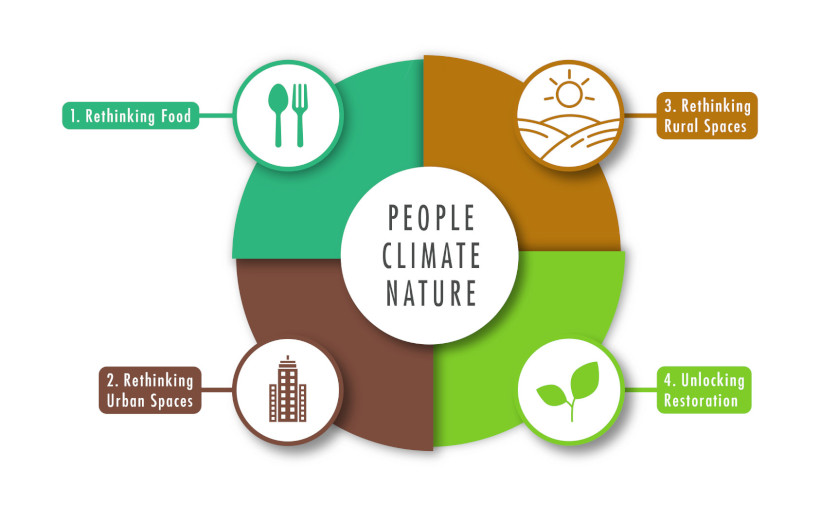
C4LaNd (Competition for land – Tackling the climate and biodiversity crises through the food, energy and materials nexus) is an International Research Training Group addressing how rising, often conflicting, demands on land can be met without compromising climate mitigation and biodiversity. By linking disciplines such as land‑use and ecological modelling, economic optimization, life‑cycle assessment, ethics, governance and spatial planning, the programme creates a holistic understanding of natural, socio‑economic and technical interactions. Its interdisciplinary training equips doctoral researchers with solid theoretical foundations to quantify land‑use contributions to climate and biodiversity goals while safeguarding food, energy, material supplies and ecosystem services. The research agenda is organized into the four clusters "Rethinking Food", "Rethinking Urban Spaces", "Rethinking Rural Spaces" and "Unlocking Restoration".
International/networks
With LPJ-GUESS we contribute to a number of international model intercomparisons, such as the annual update of the Global Carbon Budget , and the Global Land Nitrogen Budget. We co-develop LandSyMM, a sub-national to global scale socio-ecological model of the land system that integrates across the human, ecological and biophysical processes of environmental change to further understanding of Earth system dynamics.

International Summer School
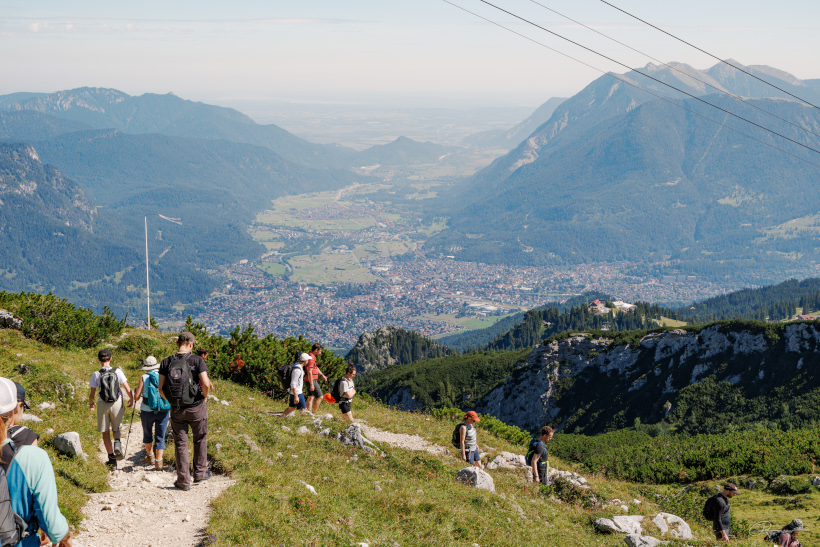
The LEMG team, jointly with IMKIFU's Land Use Change and Climate Research Group, organizes the Summer School "Land Use and Ecosystem Change".
Applications: We accept applications from MSc and PhD students in environmental sciences, geography, economics, geo-ecology, meteorology, and ecology. Limited to 35 spots each year.
Summer School 2026 will take place in August 3-12. Application is closed, there are no free spots available for this year.
Canopy
canopy is an open source python project designed to support research in the field of vegetation dynamics and climate modelling by providing tools for analysing and visualising Dynamic Global Vegetation Model (DGVM) outputs.