
.svg)
About us
Our team is interested in how land ecosystems, climate change and land-use change interact globally and regionally.
We explore through a range of modelling approaches challenges and solutions to sustainable development arising from land system dynamics. We are based at the Campus Alpin of the Karlsruhe Institute of Technology, located in the town of Garmisch-Partenkirchen in Southern Germany.
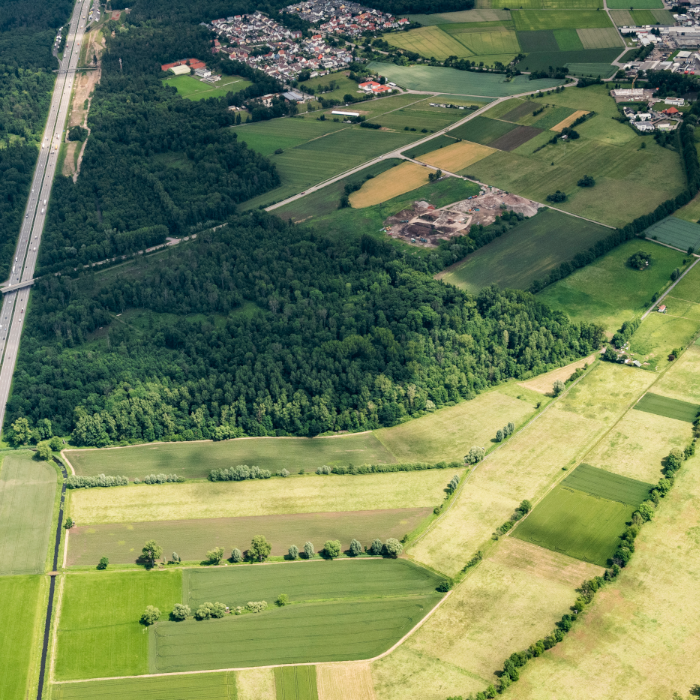

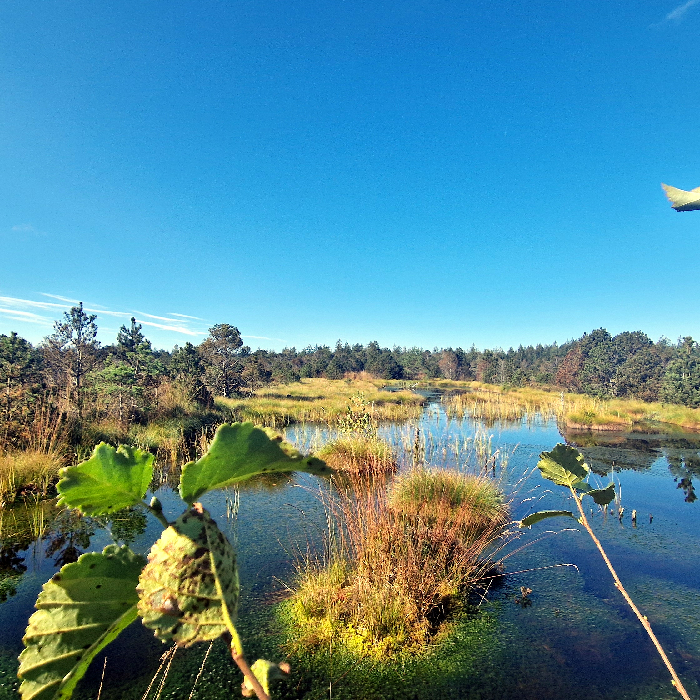

This year we met at Georg-von-Vollmar - Akademie in Kochel am See for our group retreat.
We discussed the dynamics and organization within our group, learned more about AI tools in science, and found solutions for our group's internal data management. Besides that, we also found some free time to take a walk by the lake.

Carolina collaborated with colleagues from the Chair for Artificial Intelligence in Climate and Environmental Sciences on a newly published study in Machine Learning: Earth. They benchmarked seven deep learning models against two baseline approaches for next-day wildfire danger prediction in the Mediterranean region. They also applied explainable AI techniques to evaluate whether the models learned physically meaningful wildfire relationships rather than relying solely on predictive accuracy.
Learn more
Carolina led the review study “Deep Learning for Satellite-Based Forest Disturbance Monitoring: Recent Advances and Challenges,” published in WIREs, in collaboration with colleagues across Germany and the US. In this work, the authors identify three main technical avenues to address current limitations in forest disturbance detection, attribution, and training data scarcity: spatiotemporal architectures, embeddings and geospatial foundation models, and learning approaches designed for limited labelled data. The review further emphasizes that progress toward large-scale, reliable forest monitoring will require improved benchmark datasets, stronger interdisciplinary collaboration, and more open and standardized data-sharing practices.
Learn more